Q9. Of the Seven Wonders of the Ancient World, which is the only one that remains largely intact today?
of Can You Still Ace This High School History Quiz?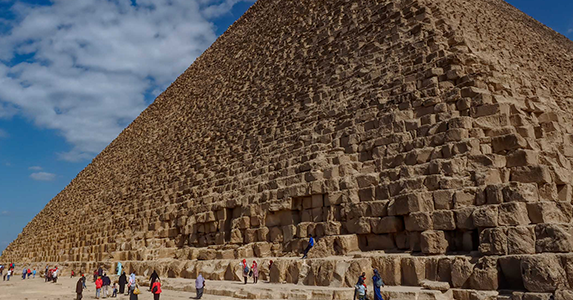
The Architectural Legacy of Antiquity: Evaluating Civilizational Knowledge in Modern Historical Assessments
The study of ancient civilizations remains a fundamental pillar of secondary education, providing the necessary context for understanding the evolution of engineering, organized labor, and human ambition. Central to our diagnostic series, "Can You Still Ace This High School History Quiz?", is the assessment of a participant's ability to identify the enduring physical markers of our collective heritage. Among these, the Seven Wonders of the Ancient World represent the pinnacle of classical achievement. To "ace" a high school-level history evaluation, a respondent must demonstrate the Mental Agility & Focus required to distinguish between historical myths, archaeological ruins, and extant structures—a cognitive demand that parallels the rigor found in high-level Executive Education and Global Leadership Seminars.
Strategic Alignment with the Quiz Theme: Validating Archaeological and Historical Retention
The query regarding the Seven Wonders of the Ancient World is strategically positioned to validate the participant’s retention of core world history modules. In a Top-ranked curriculum—the type intended to facilitate a successful transition to an Ivy League Campus Experience—the study of these wonders is not merely an exercise in naming landmarks; it is a deep dive into the socio-economic structures that allowed for such monumental construction. Understanding the survival of these sites is a prerequisite for advanced academic pursuits, such as Online Master's Programs or a Doctorate Degree Online / PhD, where the preservation of cultural property is a critical discourse.
This specific question supports the quiz theme by evaluating Memory Retention Techniques regarding the structural longevity and geographical distribution of ancient monuments. The ability to identify the "only remaining largely intact" wonder requires more than a passing interest in history; it demands a precise understanding of the environmental and political factors that led to the destruction of six out of the seven wonders. For professionals who have pursued Bachelor's Degree Completion or are currently engaged in Professional Development Courses, this question tests the foundational Executive Function Training of the brain to filter through historical "distractors"—sites that are famous but no longer physically present. Identifying the correct landmark proves that the participant has maintained a level of historical literacy that meets the rigorous standards of Regional Accreditation (WASC, HLC, etc.).
Preview of Questions: Analytical Deconstruction and Instructional Design
To understand why this specific question is a cornerstone of the "Can You Still Ace This High School History Quiz?" assessment, we must examine the pedagogical utility of the query through the lens of modern Instructional Design Tools. The structure of the question is designed to target "Persistence of Civilizational Achievement," ensuring that the "Ace" status is reserved for those who can separate the tangible from the legendary, a skill potentially enhanced by a sophisticated E-Learning Platform or Educational Immersion Programs.
The Question Focus:
Of the Seven Wonders of the Ancient World, which is the only one that remains largely intact today?
The question employs a "uniqueness anchor"—the concept of being the sole survivor. For those who have participated in Art History Exploration or Academic Study Tours, this distinction represents the intersection of structural engineering and archaeological preservation.
Detailed Analysis of the Options and Strategic Distractors:
- Hanging Gardens of Babylon: This serves as a "legendary" distractor. While a staple of Historical Landmark Tours and classical literature, the Hanging Gardens are the only wonder whose actual location has never been definitively established by archaeology. Selecting this indicates a participant recognizes the "wonder" category but lacks the Mental Agility to distinguish between literary accounts and verifiable physical existence.
- Great Pyramid of Giza (Correct Answer): Selecting the Great Pyramid indicates a precise grasp of the Old Kingdom of Egypt’s engineering prowess. Its survival for over 4,500 years makes it a primary subject of Heritage Conservation Tours and UNESCO World Heritage Sites. Understanding its unique status is essential for grasping the history of Data Science / Business Analytics precursors—specifically the mathematical and astronomical alignments used in its construction.
- Colossus of Rhodes: This serves as a "catastrophic" distractor. The Colossus was a massive bronze statue, but it stood for only 54 years before being toppled by an earthquake. Choosing this option indicates a failure in identifying the timeline of structural survival, a skill often refined through Corporate Language Training or specialized archaeology courses.
- Lighthouse of Alexandria: This acts as a "functional" distractor. The Pharos was an architectural marvel that functioned for centuries before being destroyed by successive earthquakes in the medieval period. A participant selecting this lacks the precision required for Professional Indexing Services or scholarly research, as they are conflating historical utility with modern-day physical presence.
Conclusion: Historical Precision as a Hallmark of Cognitive Enhancement
Successfully navigating this assessment is a testament to one's ongoing commitment to intellectual rigor. The legacy of the Seven Wonders is not merely a list of names; it is a lesson in the fragility of human achievement and the rare instances of structural permanence—a concept frequently analyzed in an Online MBA context or within Global Leadership Seminars.
For individuals seeking Cognitive Enhancement through history, accurately identifying these milestones ensures a robust mental framework. It demonstrates that you can still "ace" the standards set by a Non-profit University system. Whether you are a PMP Certified Project Manager or a student researching nursing programs near me, the ability to anchor modern architectural and logistical processes in their historical precedents is an invaluable trait. Maintaining this knowledge is a form of Neuroplasticity Exercise that keeps the mind sharp for the challenges of the modern global economy, mirroring the dedication required for an Official Language Proficiency Test such as IELTS / TOEFL Preparation.
Disclaimer
The information and assessments provided in this article and the associated quiz are intended solely for educational, informational, and personal enrichment purposes. While every effort has been made to ensure the accuracy of the historical facts presented, this content does not constitute formal academic credit, legal advice, or a professional recommendation for any Accredited degree program. The results of the quiz should be interpreted as an informal review of general knowledge and should not be used as a definitive measurement of intelligence or professional qualification. References to specific vocational or academic paths, such as nursing schools near me, cna classes near me, or lpn programs near me, are for contextual illustration of educational diversity and do not imply an endorsement or professional medical certification.
- A
- B
- C
- D