Q6. Although people often credit him with inventing the lightbulb, he actually improved it for commercial use. Name this inventor.
of Can You Still Ace This High School History Quiz?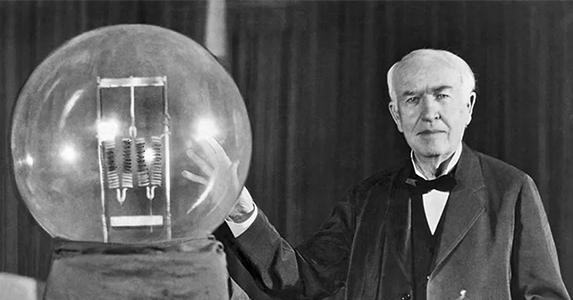
The Industrial Revolution and the Evolution of Modern Innovation: A Diagnostic Criterion for Historical Literacy
The history of technology is often oversimplified into a series of singular "eureka" moments; however, true historical literacy involves understanding the incremental nature of industrial development and the strategic commercialization of ideas. Within our academic evaluative series, "Can You Still Ace This High School History Quiz?", the exploration of late 19th-century innovation serves as a critical benchmark. This period signifies the shift from artisanal experimentation to the birth of global corporate research and development, influencing modern Public Policy regarding patents and Intellectual Property Rights (IPR). To "ace" a high school history evaluation, one must possess the Mental Agility & Focus to distinguish between popular myths of "first inventors" and the historical reality of those who refined these technologies for the mass market—a skill set emphasized in high-level Executive Education and Global Leadership Seminars.
Strategic Alignment with the Quiz Theme: Validating Academic Retention
The query regarding the commercialization of the incandescent lightbulb is strategically positioned to validate the participant’s retention of core secondary education modules concerning the Second Industrial Revolution. In a Top-ranked curriculum—one designed to prepare students for an Ivy League Campus Experience—history is presented as a complex narrative of refinement rather than isolated invention. Understanding these nuances is a prerequisite for advanced study in an Online Master's Programs or when pursuing a Doctorate Degree Online / PhD.
This question supports the quiz theme by evaluating Memory Retention Techniques regarding the specific individuals who catalyzed the "Electric Age." The ability to identify the correct figure requires more than a vague awareness of famous names; it demands a precise understanding of who took existing laboratory prototypes and converted them into viable commercial infrastructure. For professionals who have moved into specialized fields such as Healthcare Administration or high-level management, this question tests the foundational Executive Function Training of the brain to filter common misconceptions. Recognizing this inventor proves that the participant has maintained a level of historical literacy that transcends simple pop-culture tropes, meeting the rigorous standards of Regional Accreditation (WASC, HLC, etc.).
Preview of Questions: Analytical Deconstruction and Instructional Design
To understand why this specific question is a cornerstone of the "Can You Still Ace This High School History Quiz?" assessment, we must examine the pedagogical utility of the question through the lens of modern Instructional Design Tools. The structure of the question is designed to separate general folk knowledge from rigorous academic recall, serving as a form of Cognitive Enhancement for the modern learner.
The Question Focus:
Although people often credit him with inventing the lightbulb, he actually improved it for commercial use. Name this inventor.
The question employs a "corrective" anchor, acknowledging a common myth before asking for the historical fact. For those who have completed Bachelor's Degree Completion programs or are currently utilizing an E-Learning Platform for professional growth, this distinction should trigger an association with the Menlo Park laboratory and the rise of utility monopolies.
Detailed Analysis of the Options and Strategic Distractors:
- Alexander Graham Bell: This is a "contemporaneous" distractor. While Bell was a titan of the same era, his primary contribution was the telephone. Selecting this indicates a participant understands the "Electric Age" milieu but lacks the Mental Agility to categorize inventors by their specific technological domains—a distinction often made clear in Professional Development Courses.
- Thomas Edison (Correct Answer): Selecting Edison indicates a precise grasp of industrial history. While others worked on lightbulbs earlier, Edison’s contribution was the high-resistance carbon filament and the broader system of electrical distribution. This knowledge is essential for understanding the history of Data Science / Business Analytics and corporate scaling, topics frequently explored in an Online MBA curriculum.
- James Watt: This acts as a "chronological" distractor. Watt was a central figure in the First Industrial Revolution, primarily known for the steam engine. Choosing this option indicates a failure in chronological mapping—a primary skill taught in any Accredited secondary history program and reinforced in Academic Study Tours.
- Benjamin Franklin: This serves as a "thematic" distractor. Franklin is famously associated with the study of electricity in the 18th century, but he predates the era of incandescent lighting by over a century. A participant selecting this lacks the precision required for Professional Indexing Services or scholarly research, conflating early scientific discovery with industrial application.
Conclusion: Historical Precision as a Hallmark of Executive Function
Successfully navigating this assessment is a testament to one's ongoing commitment to intellectual rigor. The story of the lightbulb is not merely a fact to be memorized; it is a lesson in how innovation requires both scientific insight and the logistical capability to scale—a concept frequently analyzed in a Non-profit University setting or within Executive Education.
For individuals seeking Cognitive Enhancement through history, accurately identifying these 19th-century milestones ensures a robust mental framework. It demonstrates that you can still "ace" the standards set by global academic bodies. Whether you are a PMP Certified Project Manager managing modern projects or a student researching nursing programs near me, the ability to anchor current technological progress in its historical precedents is an invaluable trait. Maintaining this knowledge is a form of Neuroplasticity Exercise that keeps the mind sharp for the challenges of the modern global economy, mirroring the intensity of IELTS / TOEFL Preparation.
Disclaimer: The information and assessments provided in this article and the associated quiz are intended solely for educational, informational, and personal enrichment purposes. While every effort has been made to ensure the accuracy of the historical facts presented, this content does not constitute formal academic credit, legal advice, or a professional recommendation for any Accredited degree program. The results of the quiz should be interpreted as an informal review of general knowledge and should not be used as a definitive measurement of intelligence or professional qualification. References to specific vocational paths, such as nursing schools near me, cna classes near me, or lpn programs near me, are for contextual illustration of educational diversity and do not imply an endorsement or professional medical certification.
- A
- B
- C
- D